

Facelift surgery remains one of the most effective ways to reverse signs of aging and restore youthful facial contours. As this cosmetic surgery continues to grow in popularity, one of the most common concerns prospective patients express is whether they will have noticeable scars.
While all surgical procedures involve some degree of scarring, advanced facelift techniques are designed to minimize visible scarring. This blog explains how, with the right surgical technique and proper care postoperatively, most facelift scars fade significantly over time and become barely noticeable.
Table of Contents
- Understanding Facelift Scars
- Typical Facelift Incision Locations
- Factors That Affect Scar Visibility
- How to Minimize Scarring
- Postoperative Care to Optimize Scar Healing
- Timeline: How Facelift Scars Change Over Time
- Advanced Options for Treating Visible Scars
- Real Patient Stories and Before/After Images
- Interested in a Facelift in Washington, D.C.?
Understanding Facelift Scars
Today’s facelift procedures are highly customizable and designed for facial rejuvenation. With advanced cosmetic surgery techniques, skilled facial plastic surgeons can produce natural-looking results with minimal scarring.
Mini Facelift
In select cases, and only after a detailed consultation, a shorter-scar or “mini” facelift may be offered to patients with mild to moderate facial aging. This less extensive procedure uses small incisions to provide subtle lifting with a shorter recovery period, but it is not suitable for everyone. The vast majority of patients, including those with sagging skin, will benefit most from a traditional, full facelift to achieve balanced, lasting rejuvenation.
Traditional Facelift
A traditional facelift is the most common and comprehensive approach for patients seeking significant facial rejuvenation. This procedure is designed to correct moderate to advanced signs of aging in the mid-face, jawline, and neck.
Incisions are carefully planned to follow a natural crease around the ear and within the hairline, making them as discreet as possible once healed. These incisions are intended to preserve the natural contours around the ear to maintain a natural look. The type of facelift performed determines the exact placement and visibility of the resulting scars. Depending on the patient’s anatomy, incisions may be placed either behind or in front of the tragus.
There are two main surgical techniques:
- SMAS Facelift: The SMAS technique also targets the deeper support layers of the face but involves tightening and re-suspending the SMAS and underlying tissues without fully releasing them, as in a deep-plane lift. It offers excellent rejuvenation for patients with moderate aging changes and can be tailored based on individual anatomy and goals.
- Deep Plane Facelift: This advanced method lifts and repositions the deeper facial layers, including the SMAS (superficial musculoaponeurotic system) and underlying fat pads, rather than simply tightening the skin. Because the lift occurs beneath the surface layers, tension on the incision lines is reduced, which helps the incisions and scars heal more smoothly and naturally. The deep-plane approach also delivers the most long-lasting, natural-looking results, especially along the cheeks, jawline, and neck.
Typical Facelift Incision Locations
Facelift incisions are customized to each patient’s anatomy, degree of facial aging, and aesthetic goals. Most incisions are placed in the natural contours of the face. Common incision sites include:
- Along the hairline near the temples
- In front of the ear or behind the ear
- Behind the earlobe and along the lower scalp
- Occasionally beneath the chin to enhance neck contouring
Factors That Affect Scar Visibility
A few different elements determine how your facelift scars will look as they heal. Some are within your control, while others depend on your body’s natural healing process.
- Surgical Skill and Technique: The way incisions are planned, the care taken in handling tissues, and how the skin is closed all affect how smoothly scars heal.
- Your Body’s Healing Response: Age, genetics, and overall health play a major role in how the skin repairs itself after surgery.
- Skin Type and Tone: Some skin tones are more likely to develop pigmentation changes, while lighter complexions may stay pink a little longer before fading.
- Aftercare and Lifestyle: Closely following your surgeon’s instructions—keeping the area clean, avoiding strenuous activity, and using recommended scar-care products—can help scars heal neatly and fade more quickly.
How to Minimize Scarring
Minimizing visible facelift scarring begins with selecting a qualified plastic surgeon who has extensive experience in facial rejuvenation. The outcome of your surgery depends greatly on your surgeon’s precision, how carefully the tissues are handled, and the way each incision is planned and closed.
Each incision is carefully designed to complement the patient’s anatomy, following natural hairlines and facial creases around the ear for the most discreet results. Depending on the individual, incisions may be placed either behind or in front of the tragus. Just as important as placement is reducing skin tension at closure—one of the key elements for optimal healing and minimizing facelift scars.
At Center for Plastic Surgery, our surgeons use advanced facelift techniques, including the deep-plane approach, which lifts and repositions the underlying facial layers. By correcting laxity at a deeper level, this method minimizes skin pulling and allows incision lines to heal smoothly. The result is a more natural, longer-lasting rejuvenation with scars that are typically very difficult to detect.
Postoperative Care to Optimize Scar Healing
How you care for your skin after surgery plays a significant role in how your scars look over time. We provide every patient with personalized recovery directions, including how to clean the incisions, when to resume activity, and what scar-care products can help.
Following your surgeon’s recovery plan closely is necessary for achieving the best possible cosmetic outcome.
Key steps for scar treatments during the recovery process include:
- Keeping incisions clean and dry.
- Using silicone-based scar creams, silicone gel, or silicone sheets as directed.
- Protecting incisions from direct sunlight and avoiding sun exposure and UV rays by wearing a broad-spectrum SPF 30+ sunscreen and a wide-brimmed hat.
- Avoiding smoking, which restricts blood flow and impairs healing.
- Staying hydrated and eating a healthy diet to support tissue repair.
When facelift scars heal less favorably than expected, our plastic surgeons may recommend additional treatments such as laser resurfacing, steroid or 5-FU injections, or, in rare cases, minor scar revisions to refine the results.
Timeline: How Facelift Scars Change Over Time
- Weeks 1–4: Facelift incisions may appear pink or slightly raised as early healing begins.
- Months 1–3: The scars gradually flatten and lighten in color as collagen remodeling occurs.
- Months 3–12: Scars after a facelift procedure continue to fade, blending more naturally with the surrounding skin.
- One Year and Beyond: Mature scars are typically soft, pale, and barely visible, especially when placed within natural creases and facial contours.
Advanced Options for Treating Visible Scars
In rare cases where scars remain more noticeable, additional procedures can improve their appearance:
- Laser therapy to resurface and smooth scar tissue.
- Microneedling to stimulate collagen production and soften texture.
- Scar revision surgery for persistent or widened scars.
Patients should always consult their surgeon before pursuing additional treatments to ensure the timing and method align with the healing process.
Real Patient Stories and Before/After Images
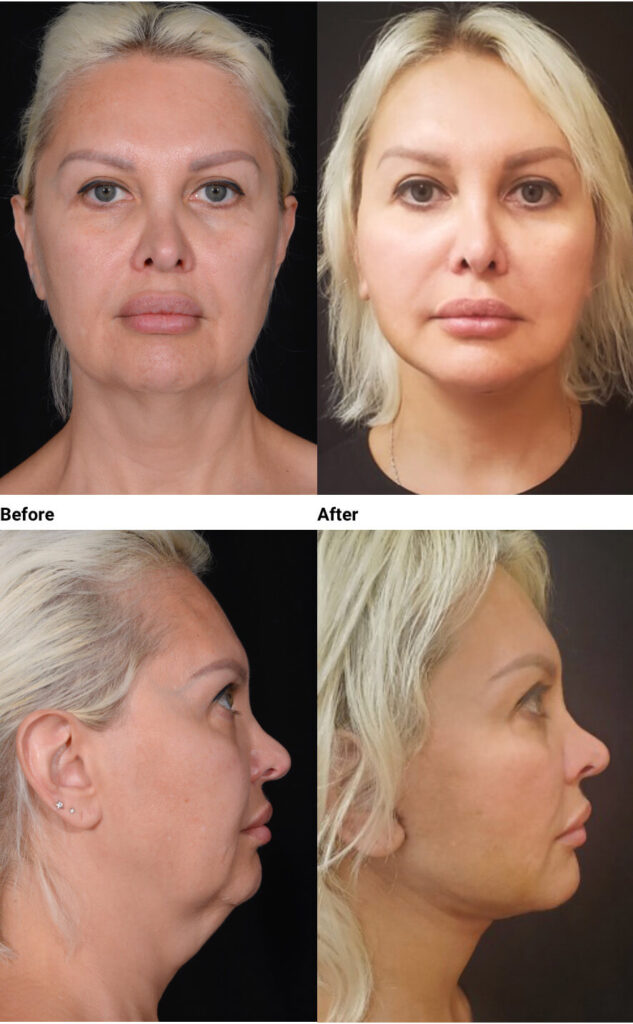
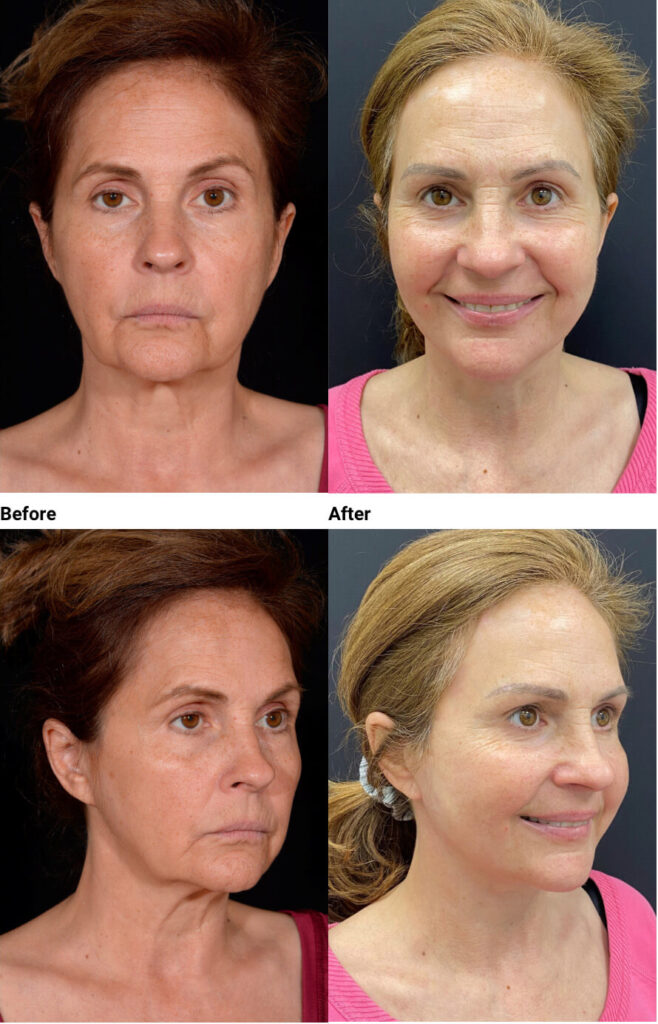
Our patients often express how pleased they are with their natural results and how their scars are virtually unseen once fully healed. Our patients’ before-and-after photos reveal how modern facelift techniques rejuvenate their appearance without making them look “done.” Their results are youthful but still completely natural.
Interested in a Facelift in Washington, D.C.?
With today’s advanced surgical techniques, most facelift scars fade beautifully over time. Choosing a skilled plastic surgeon with extensive experience in facial rejuvenation is key for ensuring the best possible results.
If you are considering a facelift in the Washington, D.C. area, the experienced facial plastic surgeons at Center for Plastic Surgery specialize in natural-looking results with minimal visible scarring. During your consultation, we will review the procedure in detail, discuss the exact location of your scars, and provide personalized guidance to support optimal healing and a healthy recovery.
We offer consultations at both of our convenient locations:
Chevy Chase: (301) 652-7700
Tysons Corner: (703) 560-2850
Our team is here to help you feel confident and well-informed at every stage of your surgical journey. Contact us today to schedule your consultation.